


Miso Soup Donabe (54oz)
Miso Soup Donabe (54oz)
✓ Free shipping on orders $200+
Couldn't load pickup availability
Product Description
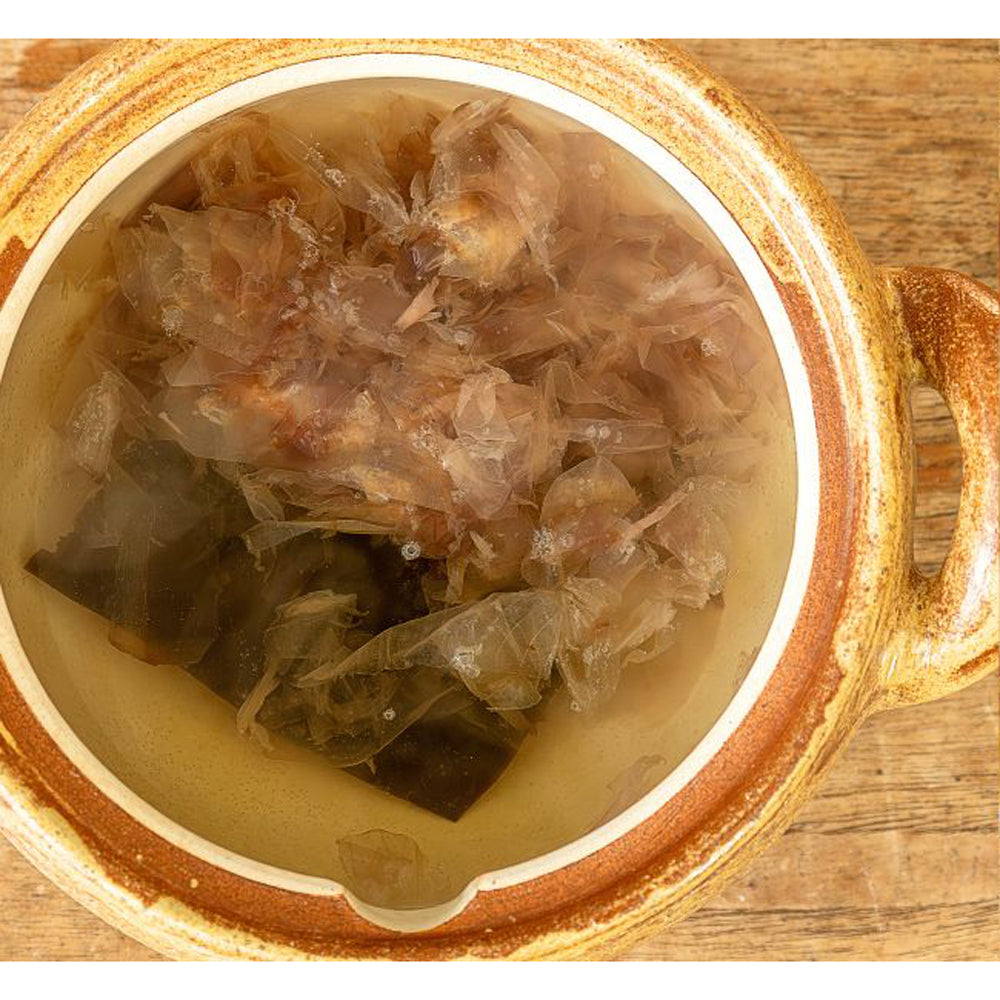
With its beautiful curves, textured finish, and extra-thick clay body, Miso-Shiru Nabe is designed for everyday soups and stews, from a quick miso soup to slow-braised meat and oven-baked beans. Its gentle, steady heat helps ingredients develop umami while holding their shape. Bring it straight to the table for a warm, comforting meal.
A Pot for More Than Miso Soup
Miso-Shiru Nabe means “miso soup pot.” Rice and miso soup are at the heart of a traditional Japanese meal, and this donabe was named for its role in cooking and serving something warming every day. It can also be heated without liquid inside, making it suitable for sautéing, stir-frying, and roasting as well as simmering.
Heat That Builds Slowly and Lasts
The extra-thick body gradually builds heat and retains it long after the stove is turned off. Food continues cooking in the residual warmth, making the pot particularly suited to slow-cooked dishes. According to the maker, soup or stew can remain hot for serving even 15 minutes after the pot is brought to the table.
Thoughtful Details for Cooking and Serving
The compact, rounded body is designed to be easy to carry and clean. The lid is intentionally not a tight fit: it can slide slightly between the rims so you can adjust the amount of steam released during cooking. A small dip along the rim provides a resting place for a ladle when serving.
The Terroir of Iga
The Iga region lay beneath ancient Lake Biwa approximately four million years ago. Its naturally heat-resistant clay has been used for open-flame cooking for centuries. Rich in prehistoric fossilized microorganisms, the clay becomes porous during firing, giving the finished donabe its exceptional heat retention.
The pot heats gradually and cools slowly. The maker explains that this porous body, together with a glaze that promotes far-infrared radiation when heated, creates gentle, steady heat that reaches the center of each ingredient, helping food cook evenly while retaining its flavor.
Handcrafted by Nagatani-en Since 1832
Iga-yaki is one of Japan’s highly regarded traditional ceramics, with origins said to date to the late seventh century in Iga, Mie Prefecture. Nagatani-en has produced authentic Iga-yaki pottery since 1832. Each donabe is carefully made by hand and takes approximately two weeks to produce. The company’s pottery is used by both professional chefs and home cooks in Japan.
Size and Specifications
Large size, ideal for 3–4 servings.
- Approx. 9 inches diameter × 6.1 inches high (23 cm diameter × 15.5 cm high), including lid
- Capacity: 1.6 qt (1,600 ml)
- Weight: Approx. 6.6 lb (3 kg), excluding trivet
- Material: Clay
- Producer: Nagatani-en
- Origin: Iga, Japan
- Included: Donabe bowl and lid, and an English instruction sheet
Usage and Care
- Ideal for gas stovetop use. Not suitable for electric or induction cooktops.
- This model can be heated while empty.
- Oven-safe up to 500°F / 250°C.
- Not microwave-safe.
- Hand wash only.
Every Piece Is Unique
All Nagatani-en donabe and Iga-yaki products are handcrafted with care. Slight variations in color, shade, shape, curves, and patterns are part of their individual character. Actual colors and nuances may also appear different from product photographs depending on lighting and viewing angle.
A Character That Develops with Use
Like a well-loved tool or piece of furniture, your donabe develops its own character over time. Very fine, vein-like cracks may appear in the glaze. Known as kannyu in Japanese, these naturally occurring glaze cracks do not affect the pot’s function.
With use, the underside may change color and develop dark, scorch-like marks. The maker describes this as a normal part of the pot’s aging and states that it remains safe to use. If the underside becomes very black unusually quickly, the cooking heat may be too high.
Note: Each piece is hand work by the artist, even the same piece will have a slightly different expression.
Share


-
NEW YORK
Brooklyn
- Address: 50 Norman Ave, Brooklyn, NY 11222
- Store Hours: 11am - 8pm
-
TOKYO